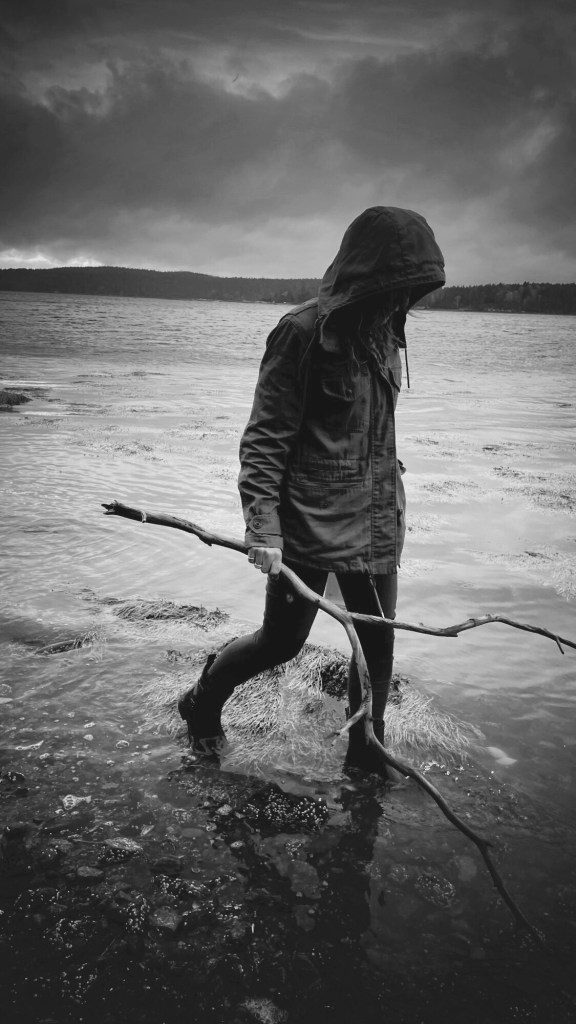
glowing quietly

A Quiet Place for the In Between

  • Let’s Be Honest—Emotions Are Wild

    One minute you’re totally fine, and the next you’re ready to flip tables (yes multiples of them) because you just spent a day and a half on a project that no longer needed to be done—because someone forgot to mention it was already handled.

    (No? Just me?)

    Being human means dealing with a lot of feelings. And some of us didn’t exactly grow up in an environment that taught us how to manage them.

    That’s where emotional regulating tools come in.

    Think of emotional regulation tools like having a good conversation with yourself—your own personal toolkit for handling life’s daily chaos without letting your emotions hijack the whole operation. (Although, let’s be real, some people would love to witness a full-blown meltdown in the open office. Nothing like a little secondhand rage to make them feel better about their own.)

    They help you respond to life like a mature(ish) adult.

    Here are a few that once practiced, eventually become second nature and in time can take a matter of seconds:

    1. Self-Awareness

    Being able to name what you’re feeling.

    I’m feeling disappointed, frustrated, kind of invisible….and angry, I’m adding angry.

    2. Pausing

    Taking a breath before you say what you are thinking (my number one tool, cause man can fire spew out of this mouth).

    I’m frustrated. This has happened before. But also… I forgot my protein shake, and I think my blood sugar is crashing.

    3. Reframing

    Looking at the situation from a slightly less dramatic viewpoint.

    Does he actually undervalue me? Or did he just have terrible timing and forget to loop me in, again?

    4.  Self-Compassion

    Not beating yourself up for reacting like a human.

    This wasn’t a meltdown. I was up late helping a friend, slept in, skipped my routine. Reminder: I need to take care of myself in order to deal with the everyday things that will inevitably pop up.”

    5.. Healthy Communication

    Being clear without being passive-aggressive (or straight up aggressive).

    When I wasn’t included in that update, I spent hours doing something that didn’t need to be done. I know it wasn’t intentional, but it’s happened more than once, and it makes me feel unappreciated.

    Emotional regulation helps you stay grounded.

    It takes one moment, and helps you to keep it at that.

    It keeps you from spiraling.

    Naming+Pausing+Reframing+Communicating = healthy adulting.

    RP

    PS – yes, this was based on real life events, a big shout out to my teammates who have always been able to laugh with me…and keep back up protein bars for emergencies.

  • I grew up with two older sisters, which meant there were always girls around. (Yes, my poor younger brother—who only began appreciating this fact around age 14. Though let’s be honest, I think he low-key enjoyed his Ken doll and boy Cabbage Patch Kid. Probably explains why he and I can talk for hours now.) But I digress. This isn’t about my brother—it’s about girls.

    Growing up with sisters and lots of girlfriends in Northern California and Florida, I kind of took it for granted that girls would just naturally like me.

    That is—until I went on my first international volunteer trip and quickly found out that wasn’t always the case.

    I’m pretty sure I came in too happy, too confident… just too much. And they didn’t quite know what to do with it.

    Needless to say, we were all friends by the end. But now, whenever I walk into a room or a new situation where we’ll be working together, and I see that look—like they don’t quite know what to do with all of this—I just think, “Don’t worry. You’ll love me in the end.”

    The reality isn’t that people dislike you—it’s that they dislike what they think they know about you.

    So give it time.

    Keep showing up.

    They’ll come to see who you really are—and they’ll love you for it.

    And as a side note: if that’s true about what they think of you, could the same be said about what you think you know about them? Investigate. Be patient. You may find, in the process, not just understanding—but a true friend.

    So walk in that room, give people time, they are going to love you, just as I do.

    RP

  • At the risk of sounding like endurance sports are all I think about…I am going to use it to illustrate another topic. That of purpose – life’s direction.

    Did you know that when someone finally reaches a massive goal in the endurance sports world—like running their first 100-mile race, a goal that can take years to train for—they often feel…depressed afterward?

    Not just physically wiped out, but emotionally lost.

    After spending so long with something to fight for—to focus on, eat for, rest for, push through pain for… something to wake up for—

    when it’s finally accomplished, they are left wondering: Now what?

    Without realizing it, their goal had became their identity.

    So who are they without it?

    After pouring yourself into something for years, reaching it, and standing in the place you once only dreamed of…

    What do you do when it’s done?

    First, you celebrate. Like that runner, you pause and feel the joy of what you’ve accomplished. You acknowledge the sacrifices, the faith, the hard choices it took. You honor the version of you who dared to begin….

    And then you remember the why.

    Why you started.

    Because of who it would make you.

    And now you be that person.

    The one who’s seen her weaknesses and learned to love herself anyway. The one who’s found her strengths—and is finally ready to use them. The one who’s grown patient, forgiving, kind.

    Authenticity becomes the new goal.

    You take all that this journey shaped in you, and you live it. Proudly.

    You share your story, your struggles, your growth—not for performance, but connection.

    You give more freely—especially in the ways you haven’t been able to while in that goal.

    You define your values. You notice your strengths and build on them.

    Because now, the goal isn’t another summit.

    It’s presence.

    It’s connection.

    It’s remembering who you did it for—and knowing He’ll make sure your training never ends.

    He sees your value. He’ll help you see it too.

    Because He’s not found in the next thing.

    He’s right beside you.

    And that is enough.

    RP

  • Did you know that the most important part of getting physically stronger… is recovery?

    A workout can leave you sore and barely able to walk, but if you don’t take time to rest, it does very little for you.

    It’s during rest that your muscles repair, rebuild, and adapt to what they’ve just been through. Without it, you can actually grow weaker—not stronger.

    Our minds work the same way.

    Our Creator designed each 24-hour day with a time when the world grows quiet, the lights dim, and the soft sound of crickets (or, in some seasons, pure silence) settles in.

    Why?

    So our minds can process the experiences of the day. Sort memories into mental pockets labeled “what worked” and “what to change next time.” That overnight reset is often enough to keep us going.

    But sometimes, life asks more of us.

    Sometimes, one night of sleep simply isn’t enough.

    Maybe you’ve been circling the globe on back-to-back trips.

    Maybe you’ve spent weeks in unfamiliar or uncomfortable situations, trying to do good in big ways.

    Maybe you’re taking your beloved mother to weekly treatments—watching her fight to be strong for you, while you know she’s only experiencing pain.

    Or, taking care of one who seems to be showing no strength at all.

    Maybe you’re supporting your husband as he faces the scars of childhood trauma— becoming his protector when he wants to be protecting you, but can’t.

    These moments are heavy.

    And they are gifts.

    They stretch you, grow you, deepen you.

    But only if you give yourself time to rest.

    Time to let your brain and body catch up. To heal. To strengthen.

    If you have been involved with endurance sports then you know a little about active rest—gentle movement that help your system recover after a major exertion. A slow walk. A bike ride on a flat road.

    When it comes to emotional exertion, quiet activities can do the same. Painting, writing, journaling, sipping tea. Organizing a drawer. Letting yourself be vulnerable with safe, trusted people.

    It gives your mind space to heal. It transforms pain into strength.

    It builds the kind of wisdom, compassion, and quiet courage you’ll need for whatever important, beautiful, hard thing comes next.

    This is why I write. The process of it. The mindfulness of it. The vulnerability of it. It takes what I have poured out of myself, and fills it back up.

    So allow her to come out, the poet, the painter, the story teller, the song writer, the potter in you. Let her reveal herself.

    She may be awkward at first. But allow her to be vulnerable. Allow her to warm up. She will help you recover. She will make you stronger.

    RP

  • I almost titled this post Dead Bodies—because, honestly, that’s what it’s about. But to avoid sounding too morbid or dramatic, I’ll call it Awareness.

    Recently, I found myself in a situation where I was certain the people around me could sense the pressure I was under. I even tried to communicate it gently, hoping they’d catch on. But nothing changed. At first, I was flabbergasted—and yes, a little angry. But eventually, I had to face the truth: some people are so unaware that they will step right over your dead body without even realizing they had anything to do with it.

    So what do we do with that?

    We could get angry.

    We could flip tables, scream, or cut people off.

    And honestly, sometimes that reaction sounds fabulous. But the truth is this: something is preventing them from seeing the toll their requests or expectations are taking on you.

    And in that realization, you become aware—of your need to set healthy boundaries.

    So the next time you find yourself clearly expressing your limits, only to have them ignored, remember this:

    it is your responsibility to say, “No. I will not be doing that.” (Or inwardly acknowledging that their expectations are not something you are required to live up to.)

    Does the thought of it cause an overwhelming feeling of guilt and failure to well up in the pit of your stomach?

    Yeah, me too.

    So much so that at this point in my journey it feels nearly impossible.

    However, I know it is possible, and I also know those in my life who love me, desperately wish that I learn it. After all I want the same for them. I would fight to my death (more dead body talk) for them to get it, so I must fight just as passionately for myself.

    So this year I’m making it a point to live it out. To practice it. To let it become part of who I am.

    To be someone who does for others, and yet knows when it’s time to allow others to do for themselves.

    Let’s be real: there will definitely be posts titled ‘Relapse’, ‘Oops’, ‘Here I go again…’. But I’m going to get it! And so are you!

    Awareness is the first step…that’s where change begins.

    RP

  • I think it’s safe to say that over the past five years or so, many of us have become increasingly aware of the concept of emotional intelligence. Whether we’ve been on the receiving end of someone else’s lack of it—or found ourselves reacting in ways we didn’t fully understand—we’ve all had moments that revealed how deeply we need to grow in this area.

    There’s a real and painful fallout that comes from being in the wrong place at the wrong time when the weight of the world collides with someone who isn’t aware of their own emotions.

    Their pressure, their unprocessed stress, their pain—it spills over. And sometimes, it spills onto you.

    Your joy, your abilities, even your simple presence might unknowingly trigger something in them, and suddenly, you’re the target.

    It can leave you feeling hurt. Confused. Angry. Scared. Threatened.

    And then, after drying your tears, you dig deep.

    You realize their reaction had little—if anything—to do with you.

    But that doesn’t mean the experience didn’t leave you without wounds. Wounds that need healing.

    When it comes to anger over pain inflicted, in all honestly, one of the hesitancies I had to writing again, was the fear of revealing my own—of unleashing it.

    I could have titled this post Anger, Fear, Threat, or Disappointment, because those are very real parts of what we can feel.

    But instead I chose to title it Forgiveness—because that’s the answer to healing.

    The first step is acknowledging that it’s okay to feel the raw feelings of pain. The second is knowing that it’s forgiveness that brings the healing.

    Forgiveness that’s rooted in love: love for Him, for yourself, and yes, even for the person who hurt you.

    Forgiveness is a fruit of emotional intelligence.

    It’s born from understanding—of yourself, and of those around you who may not yet have learned how to truly feel what they’re feeling.

    And while the process isn’t easy, I love knowing it’s possible, I love knowing that you can be hurt, and yet you can become stronger.

    You can become more compassionate. You can become more gracious. And you can love those who hurt you even more deeply.

    Because after all, though some space may be needed for a time. One day, they will be in a position in which they are ready to grow.

    And what a reward it will be to celebrate in their ability to truly understand love, self assurance, and the strength of vulnerability.

    RP